
Peatzilla | MP
By: Thom Fain
There’s a particular type of loneliness that comes with being the last one at the party – not the melancholic kind, but the triumphant sort. The kind where everyone else caught their flight home, but you stayed because this place stopped feeling foreign and started feeling like yours.
Xena sits across from me in Shimbashi on a crisp January evening, and I’m struck by how much has changed since we last shared a broadcast booth at Historic X-Over II and Dream Queendom ’24. Back then, she was navigating her return from a devastating year-long injury layoff. Now, she’s the only long-term gaijin mainstay in STARDOM – a distinction she never asked for but has grown into with quiet defiance.
The math is stark: Megan Bayne signed with AEW. Thekla departed for AEW. Jamie Hayter returned to her AEW spotlight. Xia Brookside landed in TNA. Mariah May (Blake Monroe) – once her Club Venus stablemate alongside Mina Shirakawa – became one of AEW’s brightest stars, before turning her attention to the world stage in WWE.
Even Mina herself now spends most of her time* on American television, having become a breakout performer for AEW.
And Xena? She stayed.
Not because the offers didn’t come. Not because she lacked the talent — anyone who’s watched her brutal chops and high-speed offense knows better. She stayed because somewhere between navigating Tokyo’s bewildering train system, learning to read the air in Japanese locker rooms, and building a home with her partner DAGA, Japan stopped being a destination and became her destination.

Masahiro Kubota | MP
“This is my home now,” she tells me simply, and there’s no performance in it. No wrestler working an angle. Just truth.
I was there when her original faction formed, watched it evolve into Empress Nexus Venus under co-leader Maika’s intensity. I saw the exits, the injuries, the American money calling talented women away.
But Xena never heard that call. Or if she did, she hung up.
Our conversation in Shimbashi isn’t quite like my marathon session with Kenny Omega – there’s no secret Chiba dojo revelation, no match-of-the-year double 450 splash origin story. What Xena offers is something equally rare: an unvarnished look at what it means to commit to joshi wrestling when everyone around you is using it as a stepping stone.
She talks about respect without romanticizing it. About the senpai-kohai system without overcomplicating it (“Just be a nice person”). About STARDOM supporting her through injury not as some heartwarming movie moment, but as the reason she’s determined to pay them back in the ring. About building a family in Tokyo while the rest of the Western wrestling world assumes Japan is just chapter two before the real story begins in America.

Masahiro Kubota | MP
There’s no bitterness when she discusses her former stablemates’ departures – genuine congratulations, actually. But there’s also quiet pride in the choice she made. While others chased American television deals and guaranteed money, Xena chose bruises, brutal schedules, packed tour buses, and the devoted STARDOM fanbase that never forgets.
“When I was injured, wrestling moves on without you,” she reflects. “So you got to have that backbone to go back…”
She found hers in Tokyo. In chanko and ramen and train stations she used to get lost in. In a partner who understands the business. In a promotion that took care of her when her body failed. In fans who don’t need her to cut twenty-minute promos to understand what she represents every time she steps through those ropes.
The Western wrestling narrative loves its stepping stones — Japan as the place you go to learn your craft before the “real” promotions notice you. But what happens when someone looks at that narrative and says, “No, this is the real promotion”?
You get Xena. Battered, loyal, unmoved by the siren song of American money. The last gaijin standing not because everyone else left, but because she’s the only one who truly stayed.
As we wrap up our conversation, a small crowd has gathered — curious onlookers in Shimbashi wondering why there’s a camera pointed at a visibly athletic foreign woman. She barely notices. She’s used to standing out by now. Used to being the outsider who became an insider. Used to being underestimated.
Monthly Puroresu:
We’re here with Xena of STARDOM, Empress Nexus Venus. She just made her big return to pro wrestling after a long layoff. How does it feel to be back?
Xena:
It feels good. I think the last time we saw each other was at that commentary booth.
Monthly Puroresu:
It was. We were on commentary. Historic X-Over II. It was a good time. That was fun.
Xena:
Like Waka says, I’m better in the ring [laughs]
Monthly Puroresu:
Well, you’re amazing in the ring, and you’re one of the last gaikokujin left [in Joshi, currently]. But let’s take it back a little earlier. Why don’t you tell us, what got you into joshi pro-wrestling? What’s your origin story with Japanese women’s wrestling?
Xena:
I’m speaking for myself, but when you start wrestling and when you’re young, all you know is WWE. So when you’re at an academy, you’re searching up wrestling moves, promotions, where people train and come from. And that was my first introduction to joshi wrestling—seeing highlight reels of Io Shirai and Mayu Iwatani.
Monthly Puroresu:
So Mayu was a big… I think she’s a big entry point for a lot of people into this unique brand of Japanese professional wrestling. But walking back to your first tour with STARDOM, you’re stepping into a locker room. There’s a language barrier. The wrestling style is different, and the expectations are unspoken. What were those first few matches and first few tours like?
Xena:
I don’t think anything can prepare you for your first experience in a foreign country, let alone STARDOM, where you don’t speak the same language. So I think I was all in for the ride. I was like, yes, I want to get lost figuring out which train station I need to take. Yes, I want to get hit hard. Yes, I want to have bruises all over my body. And yes, I want to come back.

Masahiro Kubota | MP
Monthly Puroresu:
You wanted the full-blown experience in Japan. And you’ve been here now two years, right?
Xena:
Yeah, so it paid off for me.
Monthly Puroresu:
It paid off for you. And STARDOM supported you through the injury. Give us a window—what was the comeback like? What was the recovery road like?
Xena:
Well, when I was injured, I was obviously devastated, but I was like, what can I do besides pack my meals, get ready for my comeback, explore the Japanese world while I can. So I took a step back. I traveled to Okinawa with my partner. I explored the Japanese culture, the food. I love the food here. And I kept up to date with the new STARDOM stuff because there’s a lot of new—
Monthly Puroresu:
Yeah, it’s a big, big change. 2025 [and ’26] is totally different [roster] from last year.
Xena:
Yeah, from when I left. So that’s something I kept an eye on.
Monthly Puroresu:
And those women, those young wrestlers, are coming up through a dojo system in Japan, built around this family concept—eating together, training together, living this lifestyle together. How did you navigate that as a foreign woman who came from Australia, came from a totally different world?
Xena:
Well, like you said, I am a foreign woman, so I didn’t really put myself into their culture. I respected it, but I didn’t like, “Hey, I’m family. I’m Japanese now.” No, no, no, no, no.
Monthly Puroresu:
You’re not making the chanko, then?
Xena:
No, no. But I do love chanko. Chanko is pretty delicious, you got to say. Chanko in Ryogoku.
Monthly Puroresu:
At what point did you realize you needed to start handling your own interviews in Japanese? Is that something you’re trying yet? I know Maika, your friend Maika, she’s really trying to improve her English. How’s your Japanese?
Xena:
We help each other out a lot. And I actually started at Coto Academy for a couple of months. But even then, I needed to practice with someone, so I wasn’t doing STARDOM full-time. But now that I’m back, Waka and Maika help me a lot.

Masahiro Kubota | MP
Monthly Puroresu:
Good. Take us through just survival in everyday life. I mean, the train systems and how much Japanese do you really feel like you need to know versus when you’re in the ring and you’re performing and you’re ready to beat somebody up?
Xena:
I think day-to-day, phrases that I know, I can get by. You have to get lost a lot of times until you figure out the train system here, which you spoke about before with the express and local. That’s happened numerous times to me. So it’s definitely an experience of getting lost, figuring it out for yourself, learning the language, and learning how Japan operates altogether.
Monthly Puroresu:
Yeah, it’s an amazing place. For those of you that haven’t been, you got to come visit Korakuen Hall, all the amazing wrestling venues, and see the amazing women that are really going up another level.
Monthly Puroresu:
We’ve heard Mercedes Moné and many others talk about main eventing the Tokyo Dome. In America, it’s not such a foreign concept, right? For the women wrestlers to talk about main eventing [giant arenas]. In Japan, that would be a real breakthrough. Who do you see in the main event of Tokyo Dome when you picture the first [21st century] Joshi main event?
Xena:
I’m not going to name any names now because a lot can change from a year’s time. So let’s leave it as it is.
Monthly Puroresu:
Okay. It’ll be a big mystery to see. It’s going to happen—because everyone’s just stepping up their game at this time. There’s many promotions, obviously. Marigold, Mayu’s over there now. In STARDOM, everybody’s stepping up their game and gunning for that first Tokyo Dome main event.
Monthly Puroresu:
And let’s talk about American promotions. We can see on Netflix, they’re very open about wrestling being entertainment. In Japan, there’s more room in the ring to really tell your story there versus on the microphone. How has that freedom to express yourself in the ring changed you as a wrestler?
Xena:
I’d say matches are a little longer in Japan on average. The fans react really to the stuff in the ring versus… there are some emotional communications between wrestlers on the microphone, but compared with America, it’s really—I think the joshi scene doesn’t really pay too much attention to American wrestling. And I’m like that, too. Unless I’m involved in it, I wouldn’t really think twice. My place is here in STARDOM with the joshi wrestlers.
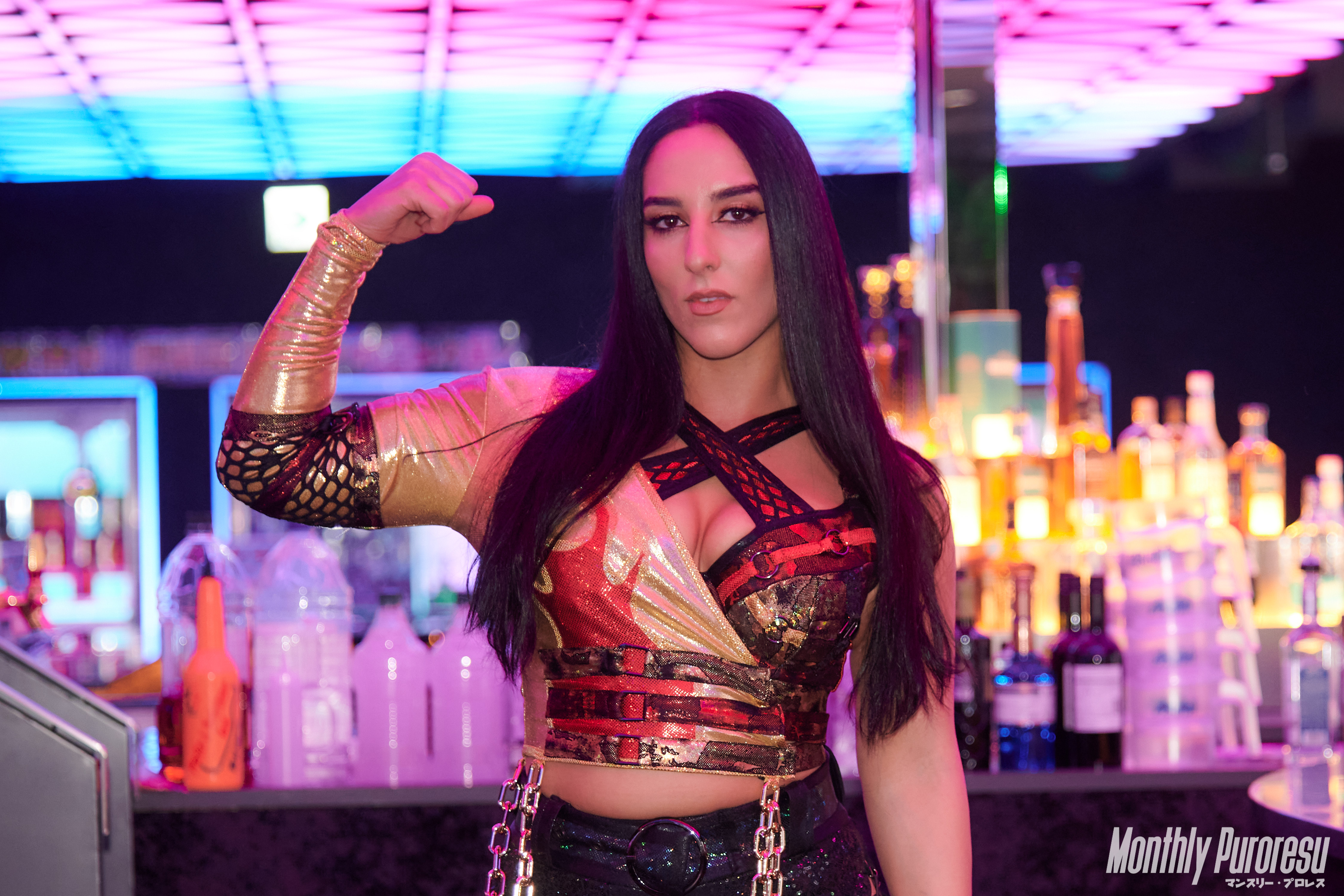
Monthly Puroresu:
That’s great. I know STARDOM is glad to have you back. And thinking about that Japanese style, that dojo—like Chigusa Nagayo and Mayu Iwatani used to have these secret sessions where [the idea is] you’re planning something new. You’re always trying to up your game. What does creative collaboration in STARDOM look like or within Empress Nexus Venus?
Xena:
We do have secret sessions, but it is a secret, so I can’t say anything.
Monthly Puroresu:
I had to go there. I had to ask.
Xena:
You had to try. I wasn’t going to spill the beans.
Monthly Puroresu:
But you’ve watched Megan Bayne, Thekla, Jamie Hayter—they’ve all gone over now to America. You’ve stayed. What’s kept you in Japan?
Xena:
I mean, congratulations to all those girls. They’ve chased what they’ve wanted. But like you said, Mercedes is trying to main event the Tokyo Dome. This is the place to be. The place for joshi wrestlers, women’s wrestling. I agree.
Monthly Puroresu:
And there’s this Western wrestler mentality of Japan as a stepping stone to WWE or AEW, but you’ve rejected that path. You’ve stayed here in STARDOM. It really is a destination and not a detour, right? Wouldn’t you say?
Xena:
I mean, every individual has their own experiences. Life gets in the way, so they need to make different choices for themselves. I got injured here. STARDOM took care of me, and I’m going to make sure I repay STARDOM back.
Monthly Puroresu:
STARDOM and their fans. Their fans are so supportive… I love their fanbase.
Xena
Yeah, they’re very energetic. I love Japanese fans. I think even AJ Styles said once in an interview, “You need to wrestle in Japan.”
Monthly Puroresu:
And others, like AJ Styles, have talked about Japanese culture taking some time to adjust to, [for instance] the concept of reading the air [Ba no Kuuki wo Yomu]. And I’ve had some meetings in the offices of Japanese wrestling corporations, and it takes some time to understand… Can you share something, like a time or a moment where you started to adjust to the Japanese culture?
Xena:
I think I’ve always done my research and respected the culture and done my best to not piss anyone off. Keep it in the ring, go full out, go home, do your thing. It’s a business. It’s work. Treat it like a business. Treat it like it’s your work. When you leave the ring, take good care of yourself.
Monthly Puroresu:
You’re on the road a lot in STARDOM, and you’re on a bus going town to town. You don’t have a private jet or anything like that. So you got to take care of yourself —
Xena:
We do. Who said we don’t?
Monthly Puroresu:
I stand corrected. Empress Nexus Venus —
Xena:
How do you think Megan keeps coming back and forth?
Monthly Puroresu:
Oh, it’s the private jet. I should have known. Getting top service. Of course.
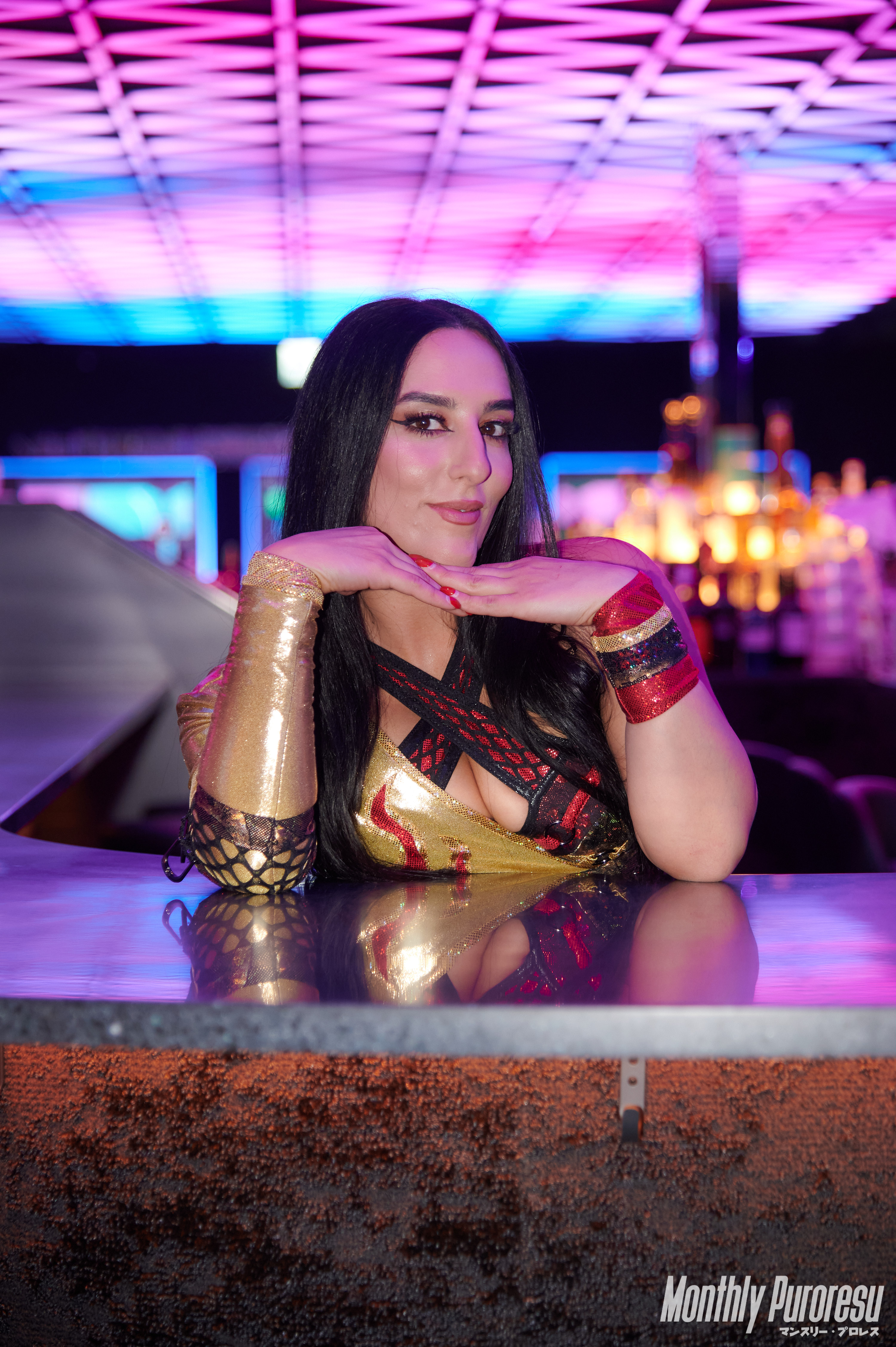
Monthly Puroresu:
Well, let’s talk about the senpai-kohai system, right? So that’s sacred in Japanese wrestling. And as a gaijin, how did you navigate that? In Japanese culture, we have the senpai-kohai dynamic. It’s very much respecting the person right above you in Japanese professional wrestling. As a foreigner, how did you navigate that and how did you earn your place?
Xena:
I don’t know if “earning a place” is the right word to use. I think it all comes back to coming to the country and being respectful and following the rules. And that’s all it is. It’s not complicated. Just be a nice person.
Monthly Puroresu:
Who was somebody—would it be Maika or Mina that was really your senior that you looked up to when you first came?
Xena:
When I first got here, Mina was my go-to person, yes. And she still is my go-to. She came and visited me when I was injured. She surprised me.
Monthly Puroresu:
Oh, really? That’s amazing. Mina coming all the way to visit you. That says a lot about you Xena, and that says a lot about your relationship. What’s some veteran advice she might have given you that you could impart on the readers at home?
Xena:
Some veteran advice? She gave me more advice on the joshi-style wrestling, because when I came, I wasn’t very top-notch, joshi-style wrestler. I think I am now. I’ve adapted my style to be an all-arounder with the high speed, my chops, everything. So I think she helped me adapt my style.
Monthly Puroresu:
I wouldn’t want to take one of those chops, although you’ve offered to give me one before.
Xena:
Have I? Oh, no. I’m bruised from the other night.
Monthly Puroresu:
Oh, so it does damage you?
Xena:
Have you seen all the metals they have on the gear?
Monthly Puroresu:
That’s true. The gear is amazing in Japan.
Monthly Puroresu:
So you’re a mainstay here at this point, more so than other foreigners that have come through [in Joshi]. You said two years. What does it feel like representing something bigger than yourself to a global audience?
Xena:
Honestly, I didn’t think I’d reach this point in my career. So being here, I’m so grateful. I’m glad I’m here. I’m going to do the best I can. And maybe we’ll see where STARDOM goes. STARDOM can go to Australia! I can represent STARDOM in Australia.
Monthly Puroresu:
There you go. And what is it about Joshi wrestling that the wrestlers who left for America didn’t understand? We see some people come here for only one or two tours. They never come back. What do you think is something maybe they were missing?
Xena:
I don’t think it’s something they were missing. I think it’s just life. They come here to learn the Joshi style. Same when you go to the UK style or like, WWE style. It’s just a style they come to learn. Almost like a world tour. It’s like you’re picking your place on the map, pick a style.
Monthly Puroresu:
Kind of like Street Fighter, looking at the map, “pick your battle,” —
Xena:
Like going to Mexico for some lucha training.
Monthly Puroresu:
Have you been to Mexico?
Xena:
I have. I went for a month, but I did not wrestle there, so I’d like to go and wrestle there eventually.
Monthly Puroresu:
That’d be awesome. So we talked about in Japan a lot, wrestlers coming up and hitting their peak and moving on. What is it like from a fitness perspective, preserving your body with as hard-hitting as Japanese style is while you’re here?
Xena:
I think training helps me a lot, being fit in the gym, eating enough protein, carbs. I don’t miss meals. I treat myself to ramen when I want to. I get myself hydrated. It’s what your body needs. You just listen to it.
Monthly Puroresu:
And I’m thinking about another interview I did with somebody who went to AEW. They wrestled here a long time, maybe 10 years, and said their body is starting to break down a little bit. So what’s your philosophy on self-preservation or longevity in the business?
Xena:
I’ll let you know in some years.
Monthly Puroresu:
Okay, fair enough. And we see a lot of people coming over here from America and the UK, and they want to make that next spot on the roster. What would you tell a young foreigner coming to wrestle here for the first time?
Xena:
I would tell them to do their research, obviously. Study some matches, know the style just like, visually, because it’s hard to study elsewhere. Make sure your look is top-notch. I think that’s very important, the way you present yourself, everything, and try learning a bit of the language just to get by.
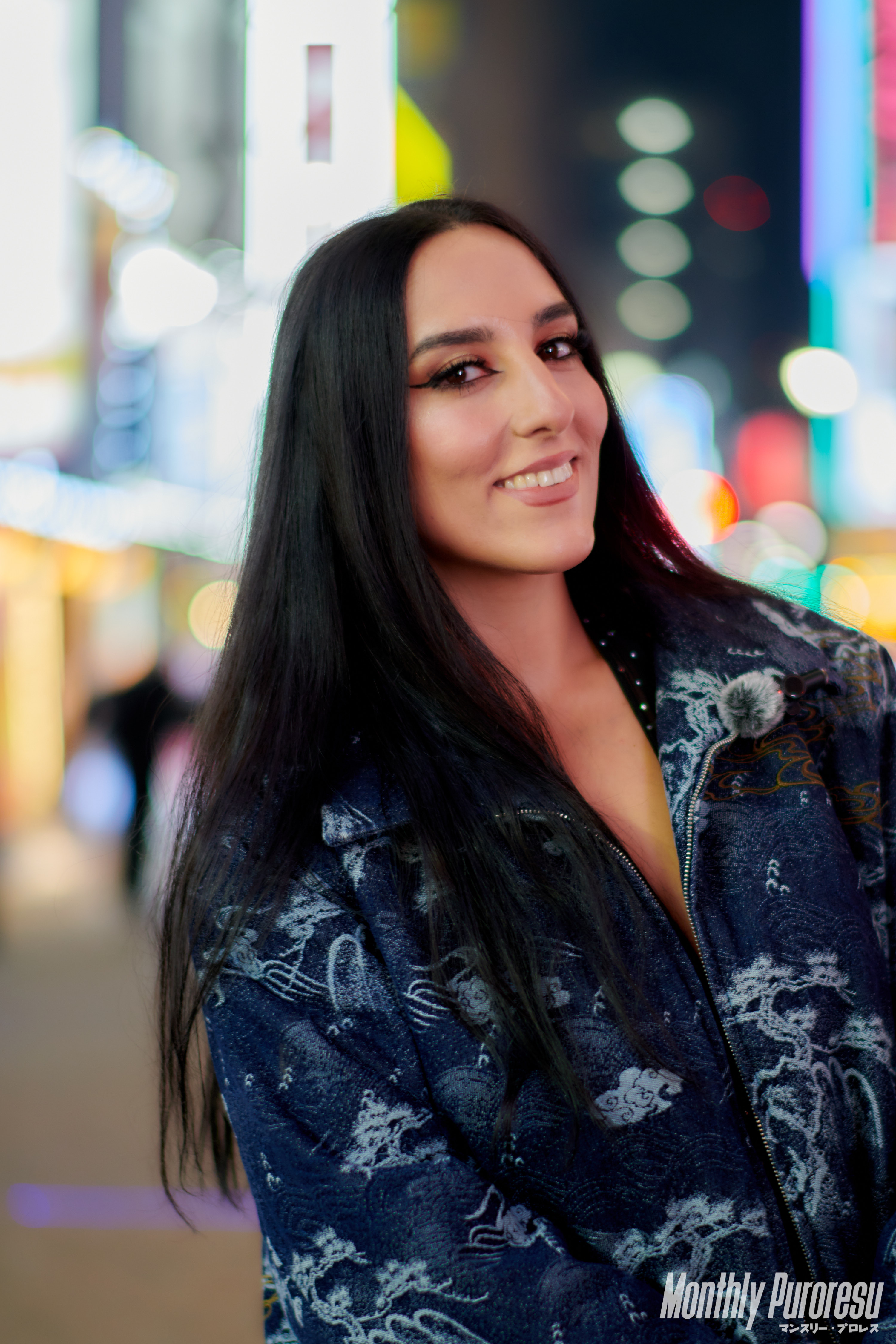
Masahiro Kubota | MP
Monthly Puroresu:
A little bit to get by. That’s great advice. You’ve built a life here, relationships, routines, a home base. What does Tokyo mean to you at this point? Is it still foreign or does it start to feel like home?
Xena:
No, this is my home now. I have a nice home here. I met my partner here. We’ve built our family here. So it’s my home now. I don’t plan on leaving.
Monthly Puroresu:
And last question. So you said you’re building a future here. You’re building a life and a family. How does that change your relationship with the promotion you work for, the fans, and the business?
Xena:
I don’t think anything’s changed. I think I’ve always known what I wanted to do—perform for the fans, be professional, put on a good show, put on the best show that I can, and go home to my family. I think that’s what it’s all about. I feel like sometimes people forget this part and focus 100% on this part. But when I was injured, wrestling moves on without you. So you got to have that backbone to go back to.
Monthly Puroresu:
Absolutely. That about wraps up what I wanted to ask you. Do you want to say anything to the fans, both here in Japan and abroad, about what to expect from Xena, from Empress Nexus Venus moving forward in 2026?
Xena:
Just keep an eye on me.
Monthly Puroresu:
Very good. Thank you so much.
Xena:
Thank you. Ciao.
Editor’s Note: For context on the author’s relationship with STARDOM and the broader joshi wrestling landscape, see “My Year At STARDOM” published last year. The views expressed are the author’s own and do not represent STARDOM’s official position.
Date:
January 19, 2026